If you don’t know the story of Tuckabache…
JD Colbert
then you don’t know the story of Tulsa.
My Native Story begins with Tuckabache — in Indian Territory
Tuckabache was a Muscogee Creek Indian born around 1800 near Sugar Creek, Alabama. His Tribal Town was Locv Pokv and his clan was Snake.
He had an extraordinary life that stretched across more than a century of change for the Muscogee people. He made the treacherous journey of Nene Estemerke, The Road of Suffering due to the Indian Removal Act of Andrew Jackson.
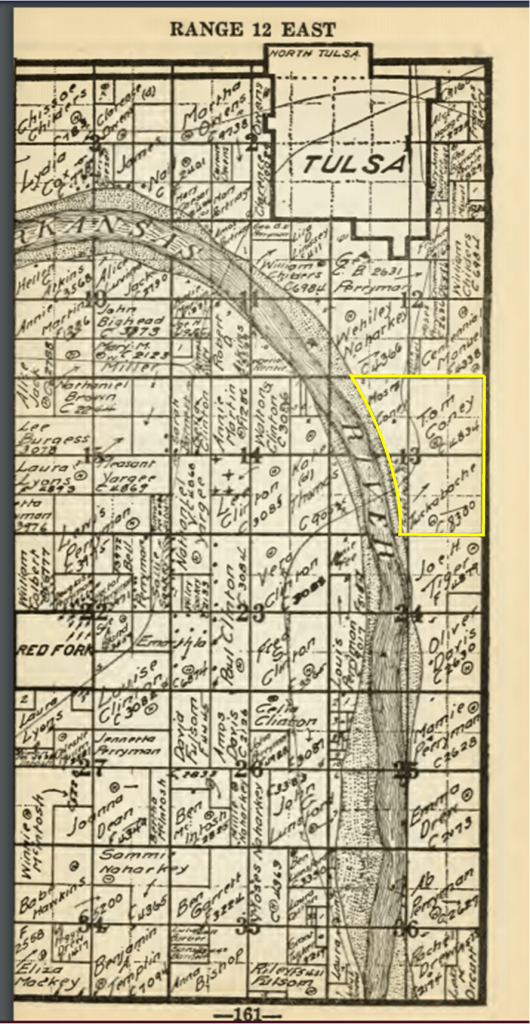
When he arrived in what was to be his new home — Indian Territory— his Tribal Town Locv Pokv — rekindled their sacred fire where the Council Oak Tree sits today. The Council Oak Tree sits on the land allotment of full-blood Creek Wihiley Neharkey who also lived to see the same destructive changes.
As a young man his elders recognized him as a heles-hayv, a medicine man.
In the early days of Indian Territory there were many tribal conflicts that caused division within his tribe.
Then there was the Civil War. For Native nations in Indian Territory, the conflict was not simply the familiar American story of North against South. Many American Indians did not initially see it as their war to fight. They had already endured removal, upheaval, and the rebuilding of their communities in Indian Territory, and now they were being drawn into another struggle that had begun elsewhere.
Nevertheless, Native nations were pressured, persuaded, and in some cases forced into choosing sides. The war divided tribal governments, towns, communities, and even families.
Most of the Lower Creeks sided with the South not in solidarity with Southern values but in solidarity with their Creek homelands in Alabama.
Tuckabache, however, was a Loyal Creek or Upper Creek and fought with Union.
The Civil War in Indian Territory brought more violence, displacement, hunger, and internal division to people who had already been forced from their homelands only a generation earlier.
Tuckabache survived that conflict as well.
He lived long enough to see his people emerge from war into yet another period of enormous change—this time under increasing federal pressure that would eventually dismantle communal tribal landholding through allotment.
Tuckabache saw the imposition of the railroad part of which went right through his property. The intrusion was significant. And another treaty broken by the US Government.
Indian Territory was land where the Five Civilized Tribes were supposed to be able to live out their culture without the disruption of outside influences.
That never happened.
At the end of the trail, there was a promise, a promise which we never knew.
At the end of the trail, there was Indian Territory for us to start anew.
At the end of the trail, in ceremony, we danced around the sacred fire, as we calmed the pain.
At the end of the trail, this did not last, as their promise was made in vain.
At the end of the trail there was a mere moment in time where we replaced the pain for peace.
At the end of the trail, we called this place,
the Council Oak Tree.
Tuckabache was approximately 95 to 100 years old when allotment reached him. Although he resisted allotment, he ultimately selected the land on which he had already lived for approximately sixty-five years.
He was not being given land. He was being allotted individual title to land within the territory his people already possessed.
Tuckabache was remembered as a great deer hunter. In an Oklahoma Writers’ Project interview, Robert A. McKim recalled that Tuckabache “had a pack of hounds” and hunted deer throughout the Arkansas River bottoms around Tulsa. The same account placed Tuckabache’s cabin near what is now Hazel Boulevard and South Cincinnati.
Today, the internationally known park Gathering Place sits on land that was part of Tuckabache’s allotment. It is an appropriate name for a place with a much older history of gathering.
Council Oak, approximately a mile away, was an earlier gathering place in Tvlse, where Locv Pokv rekindled its sacred fire after removal.
During the Allotment Era, the oil boom that made Tulsa the “Oil Capital of the World” brought enormous wealth—and devastating consequences for many Indian landowners and their families.
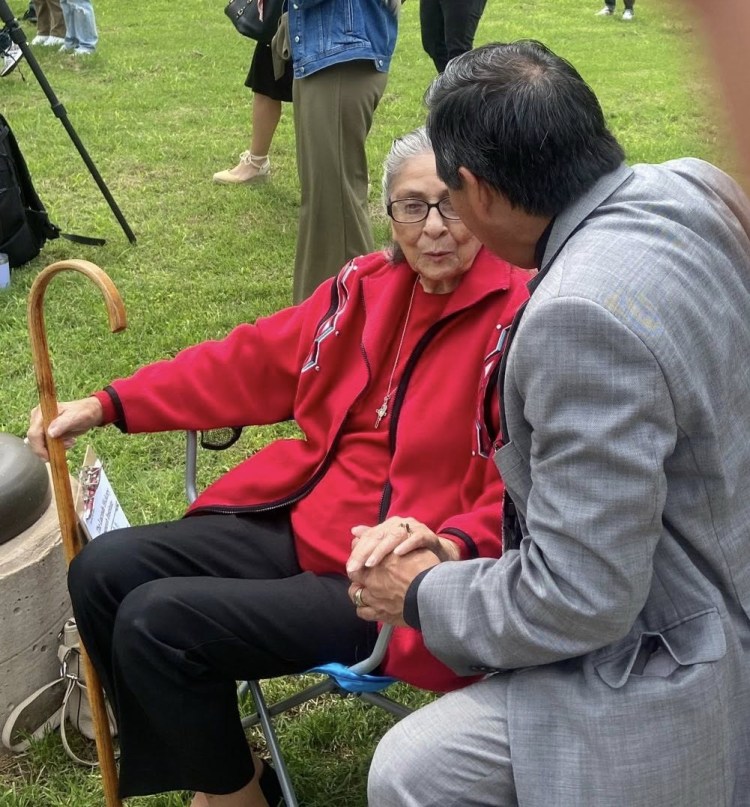
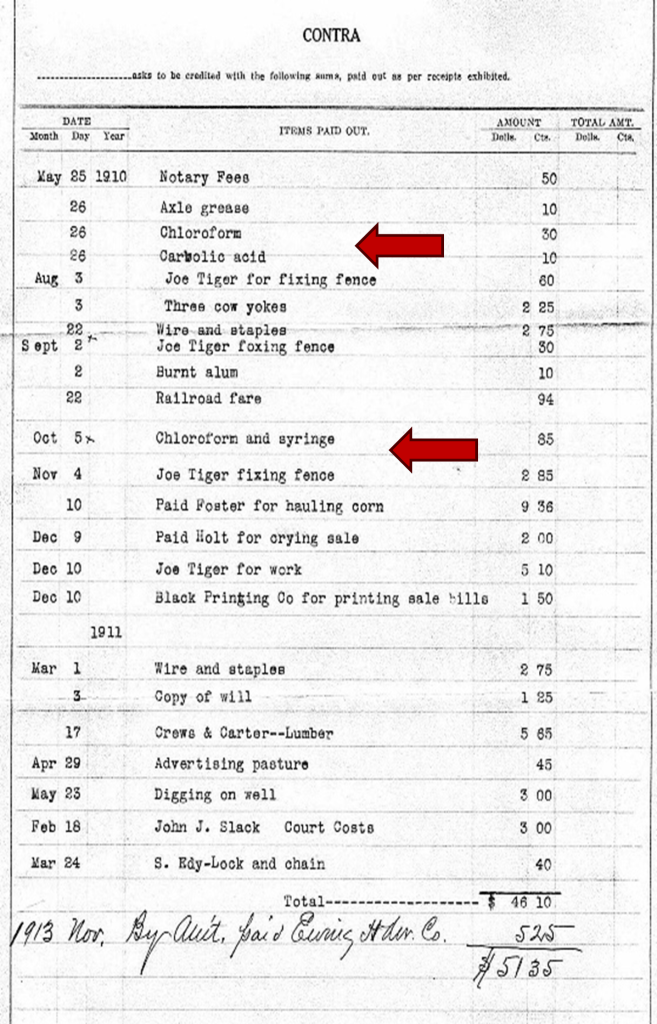
In Indian Territory: Surviving 160 Acres of Betrayal, Tuckabache’s third-great-granddaughter, Tatianna K. Duncan, examines the circumstances surrounding his death and explains why she believes what happened to him should be understood as murder.
Tuckabache died in his cabin in Tulsa on March 21, 1910. His reported age was approximately 110 years.
Now buried at Oaklawn Cemetery — Tuckabache lies beneath a massive cement monument engraved in a language he did not speak — a language he refused to speak. Above his head lies the unseen—a mass grave containing many of his relatives, their remains abruptly taken from their resting place at Cincinnati and Harvard and unceremoniously thrown into a pit above his headstone. The words carved to describe him do not hold the truth of his life. Yet there his bones must rest, the world never knowing the fullness of his Este Cate (Indian) life.
He was among the last generation of Great Creek Warriors.
His descendants remain part of Tulsa and the surrounding communities today.
We are still here.

