A Native’s Guide to the Past In Indian Territory
For Native American Allottees of the Five Tribes
After years of research and a lifetime of listening to the oral histories of stolen lands, mysterious deaths, and lost wealth, I have come to a conclusion: the allotment era was nothing short of 160 acres of betrayal. My grandparents, like so many of our ancestors, lived every day under the heavy weight of outsiders meddling in their lives and business dealings. While some may call this journey into the past “genealogy,” I call it something more—it’s an investigation.
An investigation into the tumultuous allotment era, where land was taken, lives were lost under suspicious circumstances, and wealth disappeared into the hands of those who saw us as mere obstacles. This research is about uncovering truths that have been buried for generations. To help others seeking their own family’s story, I have compiled helpful links, resources, and experiences from my journey. Whether you’re tracing genealogy or starting your own investigation, I am here to help you reclaim your family’s story.
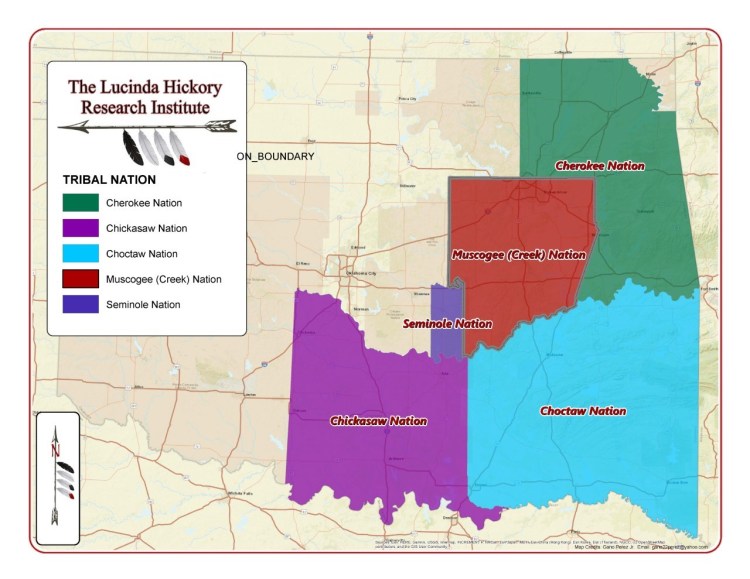
Muscogee (Creek) Nation
The Muscogee (Creek) Nation is one of the Five Civilized Tribes (Cherokee, Choctaw, Chickasaw, Creek, and Seminole), a term that was placed upon us by Anglo Americans during the removal era of the mid-1800s. As Tribal Nations we already knew we were more civilized than the powers that were encroaching upon us with manifest destiny mindsets, being that we had for thousands of years already established multitudes of communal, cultural, spiritual, political, economic, and autonomous Tribal Town communities throughout what is known as the Southeastern United States. The Muscogee people “Mvskokvlke” had a sphere of influence in primarily all of Alabama and Georgia and extending out to parts of Florida, Mississippi, Tennessee, North Carolina, South Carolina, and possibly in Virginia and Kentucky where Archeological evidence is forthcoming as more studies and knowledge is gained about our prominent civilization.
My Best Advice on Researching the Allotment Era:
- Organize Files Chronologically: Save your files in numerical, chronological order (e.g., YYYY-MM-DD, 1900-01-01). This method makes it easy to trace the timeline of events and refer back to documents.
- Create Ancestor-Specific Folders: Keep separate folders for each ancestor. While their stories will intertwine, organizing this way ensures that each individual’s history is properly documented, contributing to a fuller family narrative.
- No Detail is Too Small: What might seem unimportant today could be exactly what you’re searching for tomorrow, next month, or even years from now. Record every detail, no matter how small.
- Watch for Red Flags: There are red flags everywhere during the allotment era. Dig deeper—things are rarely what they seem at first glance.
- Reach Out for Support: Don’t hesitate to call, email, or text The Lucinda Hickory Research Institute with any questions or comments, or if you’d like to discuss your story. Talking it through can provide clarity and perspective.
- Take Care of Yourself: This research can be emotionally challenging. Take care of your mental health and well-being as you navigate these stories. Be prepared for moments that may catch you off guard, as the personal connections you uncover might feel closer than expected.
Follow the Land
I can’t stress this enough—follow the land to uncover the full story. Many probates can be found on Ancestry.com, and don’t forget to check with abstract companies or the county assessor’s office where the historical allotment was located. These abstracts are invaluable tools, revealing what happened to the land over time and providing crucial insights into your family’s history.
But before all of that, start with your family’s oral history. If you were told that your uncle went to jail and the family had to sell their land to get him out—don’t believe it! He likely went to jail so the family would be forced to sell the land. Things are seldom what they seem. All sorts of tactics were used to dispossess Indians of their land, and these family stories are often the key to understanding the truth behind what happened.
Following the Land to Discover Your Family’s Past
- Dawes Roll: Start by searching the Dawes Roll using the Oklahoma Historical Society’s website. This is a free and valuable resource to begin your research. You will retrieve your ancestor’s Dawes Roll number, which is vital for identifying them and distinguishing them from others with similar names.
- Quick Search on Ancestry.com and Newspapers.com: These platforms can provide essential records, but they do require a subscription. However, many libraries offer free access, so check with your local library for assistance. Additionally, the Lucinda Hickory Research Institute offers quick searches of these paid sites. If you need help, feel free to contact us at lhri@lucinda1913.onmicrosoft.com.
- Explore The Gateway to Oklahoma History: This is another excellent resource for historical documents. I often do a quick search here to complement my other findings.
Links for Allotment Research
Hastains Township Plats of the Creek Nation
Navigating the Hastains Plat Map
To navigate through Hastain’s Township Plats and find your ancestor’s allotment, you’ll need to understand how the book is organized by range and township. Each range covers a vertical strip of land, and each township represents a horizontal strip, creating a grid.
- Finding Your Range and Township:
- If you’re searching for Range 6 East, Township 13, first locate the section of the book that lists all plats for Range 6 East. The ranges are grouped together with multiple townships listed underneath.
- You’ll see a sequence of townships starting with Township 11, Township 12, and so forth. Look for Township 13 under Range 6 East to find the correct map.
- Searching for Other Ranges:
- If you’re searching for a different range, like Range 18 East, scroll through the book until you find the group of pages that cover ranges in this sequence.
- Since the ranges stop at Range 19 East, locate the range and then look to the right-hand side of the book for the township corresponding to that range. Once you find Range 18, you can select the township you need.
Ancestor Information Data Form
Share your story with us
Fill out your information below, a short summary of your story and we will contact you.


Donate to help us with a traveling land allotment display so may share the stories of the allotment era.
Make a one-time donation
Make a monthly donation
Make a yearly donation
Choose an amount
Or enter a custom amount
Your contribution is appreciated.
Your contribution is appreciated.
Your contribution is appreciated.
In honor of our ancestors who were under attack for their land, language, and heritage, we continue the journey!
Proudly powered by WordPress
The Voices of Our Mvskoke Ancestors

