The Allotment Era
“It is to be hoped that present conditions in our state may soon be regarded as unpleasant history to which none will care to refer”
The Oklahoma Bar Association, 1923
Percentage
Census Date
1890-1900
Count
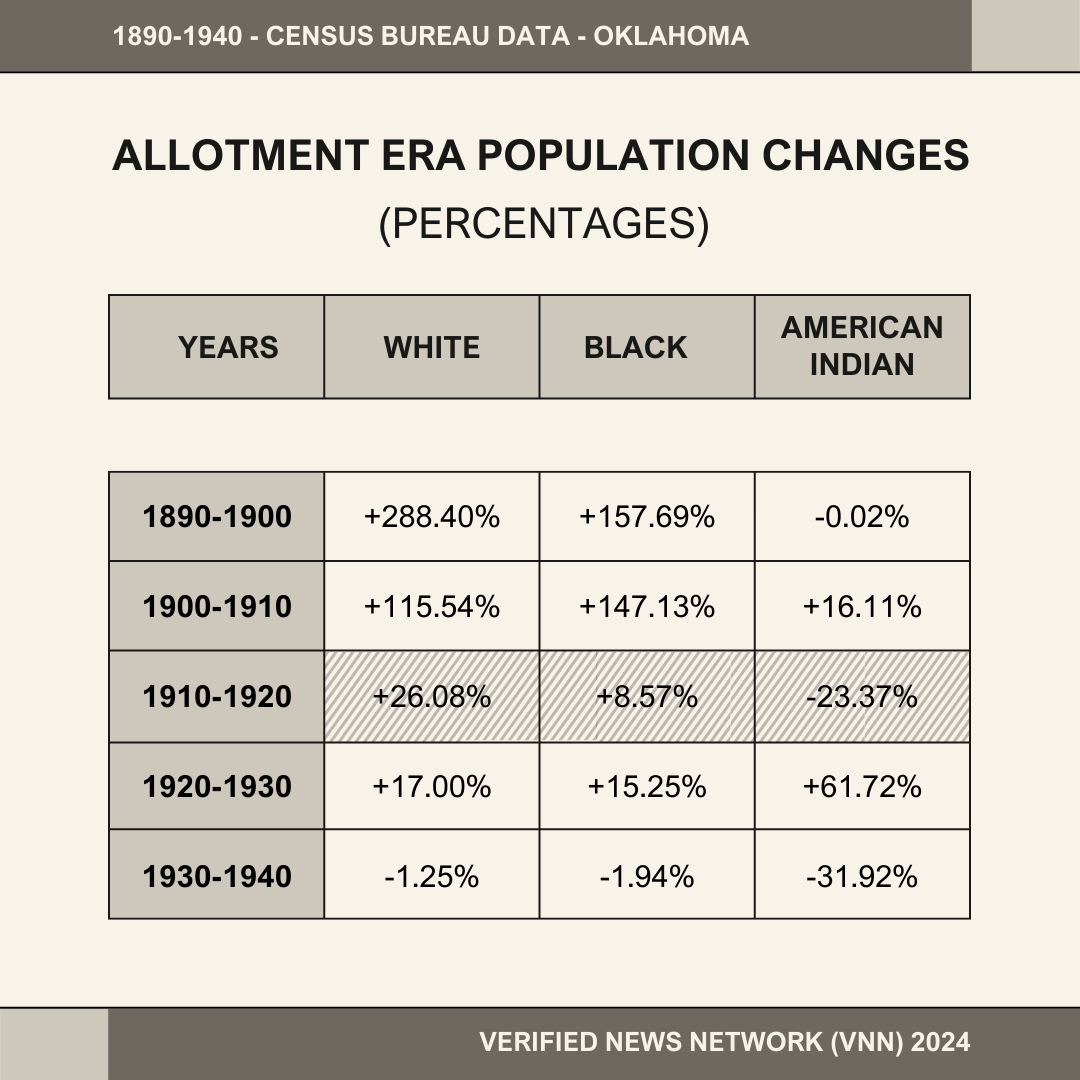
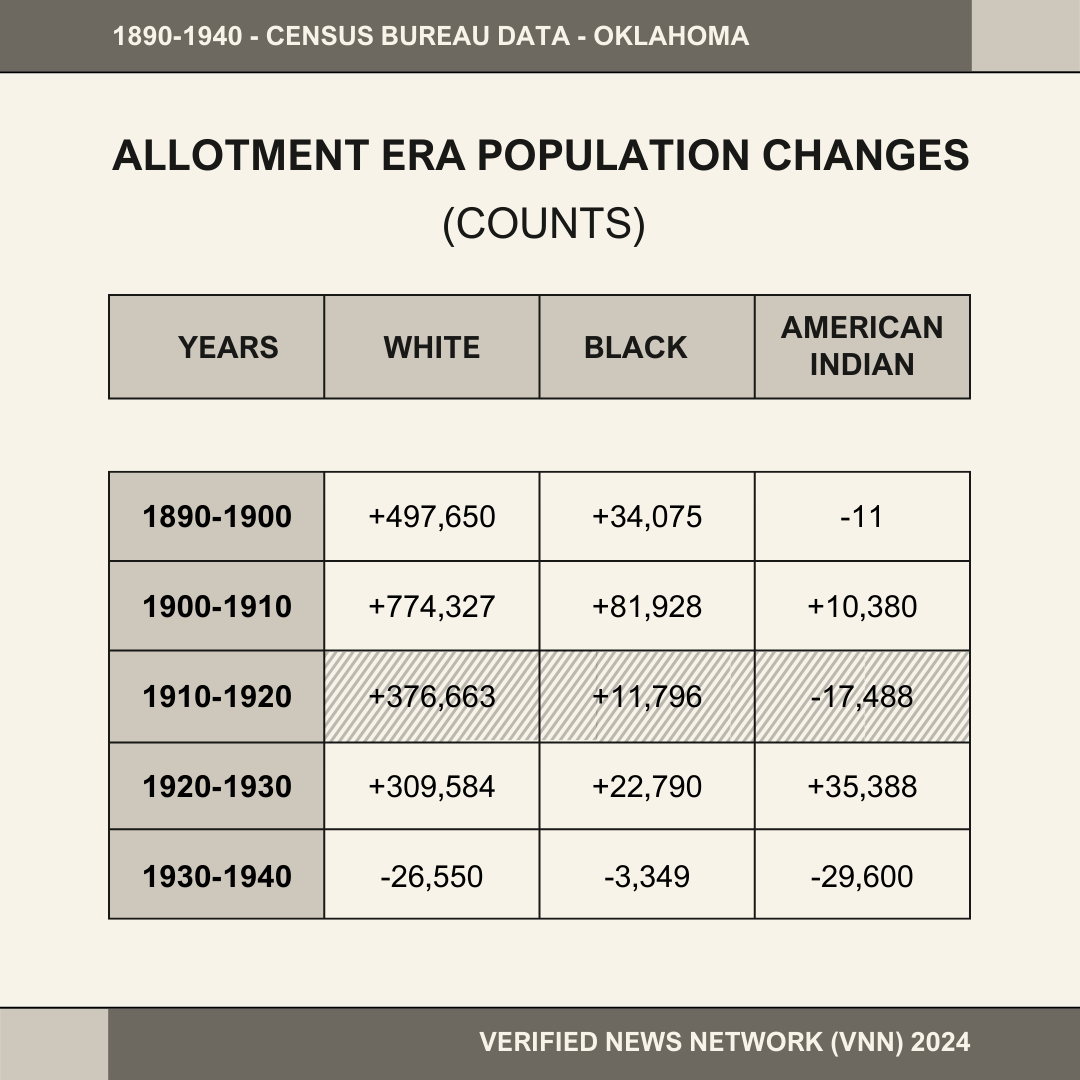
The data provided by Verified News Network offers a revealing glimpse into the profound demographic shifts that occurred during the Allotment Era. This period, marked by the forced allotment of tribal lands and the opening of Indian Territory to non-Native settlement, led to dramatic changes in population dynamics across the region.
From 1890 to 1900: As Indian Territory began to open up for land allotment, the white population surged by a staggering 288.40%, and the Black population increased by 157.69%. In stark contrast, the American Indian population saw a slight decrease of 0.02%.
From 1900 to 1910: The influx of settlers continued, with the white population growing by 115.54% and the Black population by 147.13%. During this period, the American Indian population saw a modest increase of 16.11%. This rise may be attributed to individuals with Native ancestry returning to or moving to Oklahoma to take advantage of the promise of “free land.” Many of these individuals had left the area but still possessed Native blood, though often with little blood quantum or strong ties to their Indian Nations. This era also saw the emergence of the so-called “Five Dollar Indian,” a term used to describe non-Indigenous people who paid to be listed as Indians on the Dawes Rolls to receive land allotments, further complicating the population figures
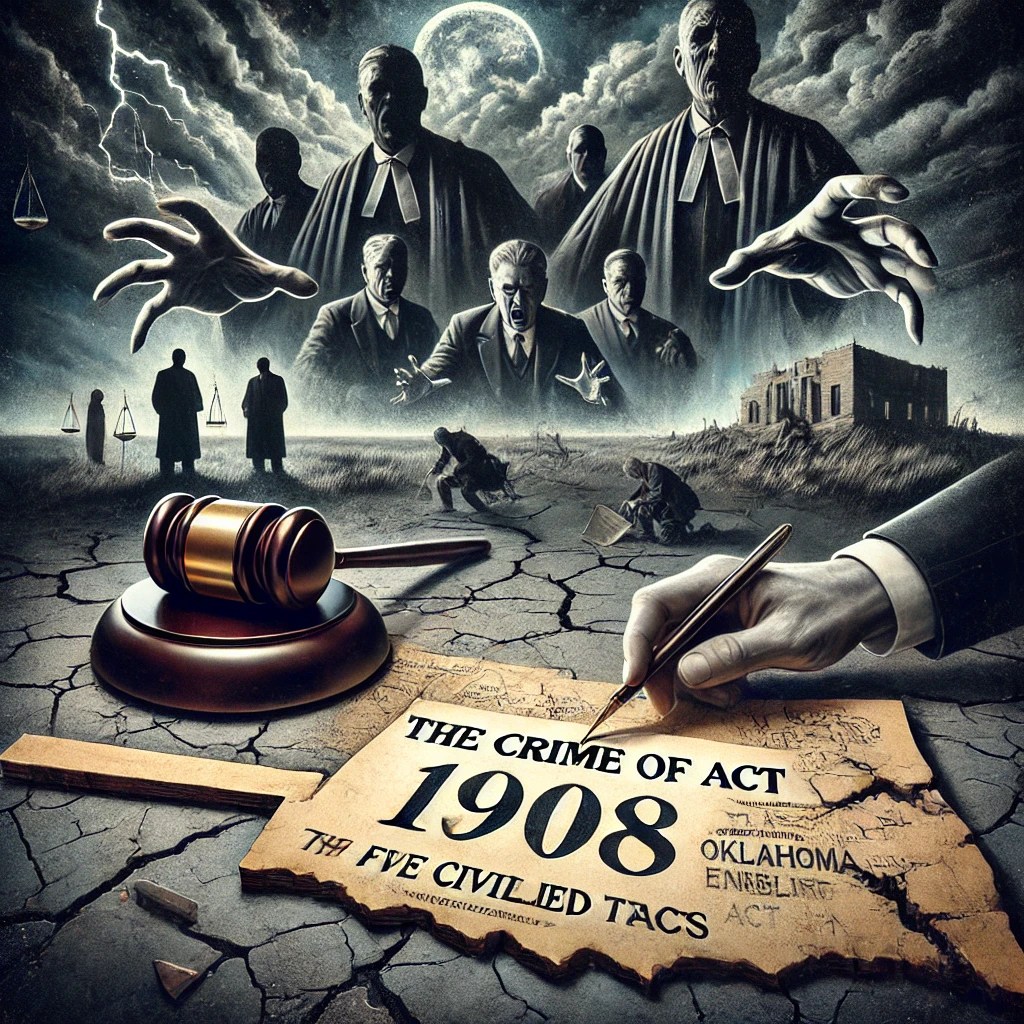
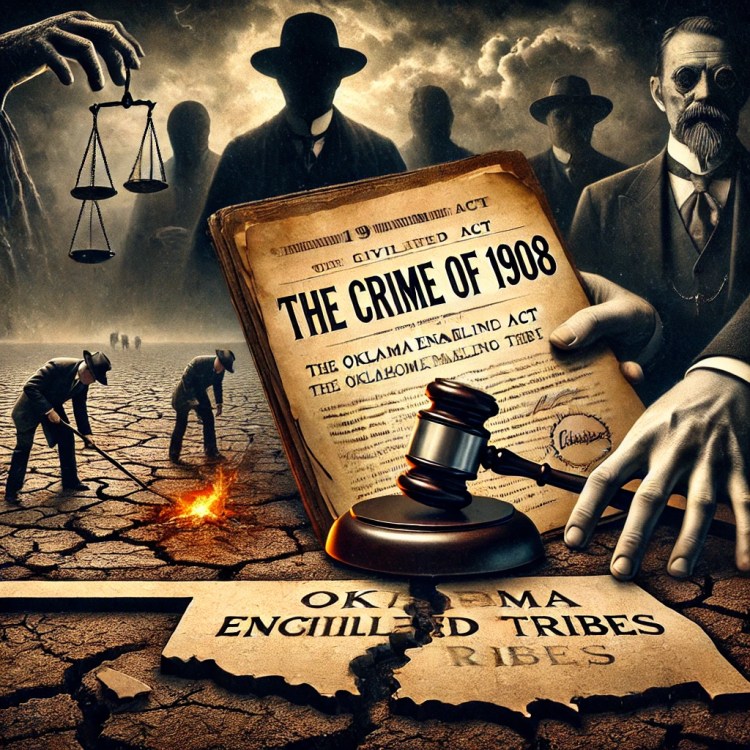
The Crime of 1908: However, following the passage of the Oklahoma Enabling Act of May 27, 1908—often referred to as “The Crime of 1908″—the demographic shifts took a darker turn.
From 1910 to 1920: During this decade, the white population continued to rise, though at a slower rate of 26.8%. The Black population also grew by 8.57%. Disturbingly, the American Indian population decreased by 23.37% during this period, underscoring the devastating impact of policies and practices that targeted American Indians.
These statistics not only reflect the population changes but also underscore the systematic displacement and marginalization of American Indians during the Allotment Era. As more land was seized and redistributed, Indigenous communities faced increasing pressure, leading to significant population declines and a profound loss of cultural cohesion. This era was also marked by a disturbing pattern of untimely and mysterious deaths among Indian people, further exacerbating the impact on these communities. These deaths, often shrouded in suspicion, serve as a stark reminder of the lethal consequences of the policies imposed during this period.
“An Indian will never truly be civilized until he learns to work for himself and not his community. “
Henry Dawes architect of the Dawes Act of 1887 aks The General Allotment Act
The Crime of 1908
Oklahoma’s Poor Rich Indians—a report by the Indian Rights Association in 1923-1924, which followed an investigation that exposed the harrowing realities faced by American Indians. This report laid bare the horrific conditions endured by some of our most vulnerable ancestors—conditions that were deeply disturbing and far-reaching. From the youngest child to the eldest members of our communities, many of whom did not speak English, these ancestors were left defenseless against the exploitation and greed that permeated this era.
It is difficult to pinpoint which U.S. government policy was the most devastating to American Indians, but the Crime of 1908 stands out as a particularly insidious chapter in this tragic history. The Oklahoma Enabling Act of May 27, 1908, specifically Section 9, was identified by the Indian Rights Association during their 1923-1924 investigation as “The Crime of 1908.” This legislation, under the guise of integrating Indian Territory into the United States, opened the floodgates to unprecedented levels of corruption and exploitation.
The act marked a crucial turning point, stripping away the protections that had been in place for the land and resources of the Five Civilized Tribes. Full-blood Mvskoke people, among others, were suddenly vulnerable to the nefarious actions of opportunists and speculators. The door was flung wide open for unscrupulous individuals to take advantage of the confusion and chaos that ensued, leading to the forced sale and loss of vast tracts of tribal land.
This dark period played a significant role in the foundation and rapid growth of places like Tulsa, Oklahoma, which would later be dubbed the “Oil Capital of the World.” The exploitation of land and resources during this time fueled the prosperity of many, but not for those whose land was taken from them. The wide-reaching damage inflicted across Indian Country was so profound that even the Oklahoma Bar Association was compelled to acknowledge it. In their resolution, they expressed a faint hope that the present conditions would soon be relegated to “unpleasant history,” one that no one would care to recall.
Yet, the scars of the Crime of 1908 remain deep and visible for those who seek to understand them. Alongside the widespread dispossession, a more sinister consequence emerged: the mysterious and untimely deaths of many Native Americans. This tragic narrative is evident in U.S. census records, which show a shocking 23% decline in the American Indian population from 1910 to 1920—a stark contrast to the continued growth of other populations during the same period. These deaths, many of which occurred under suspicious circumstances, are believed to have been sparked by the chaos and greed unleashed by the Crime of 1908.
The Crime of 1908 serves as a stark reminder of the lengths to which the government and private interests would go to dispossess Native Americans of their land and heritage. By shining a light on these dark corners of history, we can begin to understand the full extent of the injustices committed and work toward recovering the lost narratives of our ancestors.
Designed with WordPress
 The Lucinda Hickory Research Institute
Leave a comment